2026 FCC Spectrum Auction: Wi-Fi Deployment Strategies in the US
Advertisements
The 2026 FCC Spectrum Auction is poised to significantly transform Wi-Fi networking deployment strategies across the US, introducing new frequencies and regulatory frameworks that will influence connectivity for businesses and consumers.
Advertisements
How the 2026 FCC Spectrum Auction Changes Wi-Fi Networking Deployment Strategies Across the US
Are you ready for a significant shift in how we connect? The upcoming 2026 FCC Spectrum Auction is not just another regulatory event; it’s a pivotal moment that will fundamentally alter Wi-Fi networking deployment strategies across the US. This auction promises to unlock new bandwidths, bringing both exciting opportunities and considerable challenges for businesses, service providers, and everyday users. Understanding its implications now is crucial for anyone involved in the wireless landscape, ensuring you’re prepared for the technological evolution ahead.
Understanding the Spectrum Auction Landscape
The FCC spectrum auction is a highly anticipated event where the Federal Communications Commission (FCC) allocates rights to transmit signals over specific frequency bands. These airwaves are the lifeblood of wireless communication, enabling everything from cellular networks to Wi-Fi. The 2026 auction is particularly significant as it aims to free up crucial mid-band and millimeter-wave spectrum, which are vital for enhancing current Wi-Fi capabilities and supporting next-generation wireless technologies.
Historically, spectrum auctions have driven innovation and competition, leading to faster speeds and more reliable connections. The allocation of new spectrum bands directly impacts the capacity and performance of Wi-Fi networks. As demand for wireless data continues to skyrocket, fueled by IoT, streaming, and remote work, access to more efficient and plentiful spectrum becomes paramount. This auction will determine who gets to build and innovate within these new digital highways.
The Role of Spectrum in Modern Wi-Fi
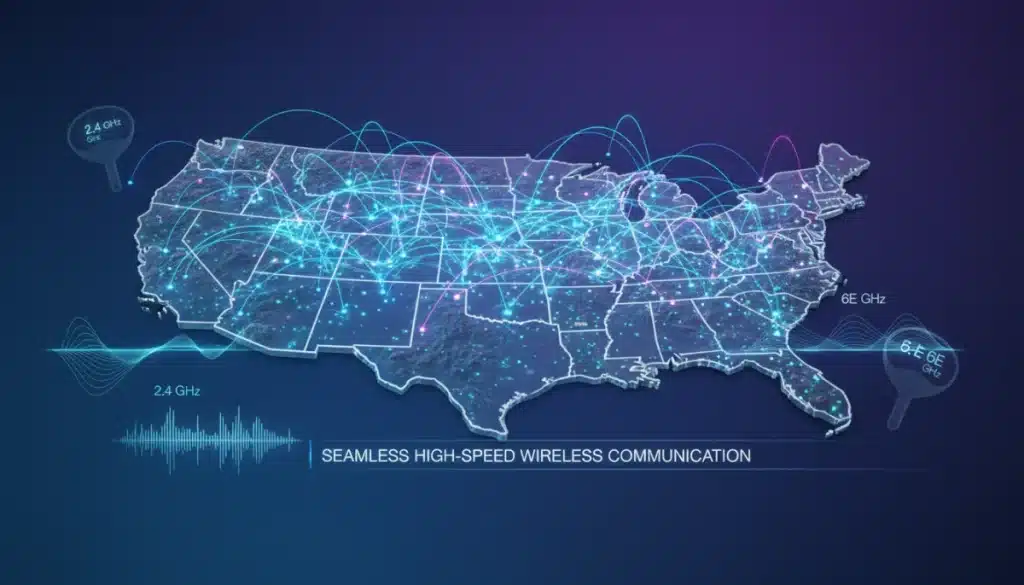
Spectrum is the finite resource that all wireless communications rely on. For Wi-Fi, the availability of clear and ample spectrum dictates how many devices can connect, how fast data can travel, and how far signals can reach without interference. The current unlicensed bands (2.4 GHz, 5 GHz, and 6 GHz) are becoming increasingly crowded, leading to performance issues in densely populated areas.
- 2.4 GHz Band: Offers wider coverage but is highly congested, leading to slower speeds.
- 5 GHz Band: Provides faster speeds but with a shorter range and more susceptibility to obstacles.
- 6 GHz Band (Wi-Fi 6E): Recently opened, offering significant capacity and lower latency, but still limited.
The 2026 auction seeks to introduce new licensed and potentially unlicensed spectrum that can alleviate these pressures, paving the way for more robust and efficient Wi-Fi 7 deployments and beyond. This expansion is essential for supporting the ever-growing ecosystem of connected devices and bandwidth-intensive applications.
Understanding the fundamental role of spectrum in Wi-Fi is key to appreciating the profound impact of the 2026 FCC Spectrum Auction. The outcome will influence everything from device design to network architecture, ultimately shaping the user experience for years to come.
Impact on Wi-Fi 7 Adoption and Beyond
The advent of Wi-Fi 7, also known as 802.11be or Extremely High Throughput (EHT), is intrinsically linked to the availability of new spectrum. While existing bands support some Wi-Fi 7 features, the full potential of this standard – with its multi-link operation (MLO), 320 MHz channels, and higher-order modulation (4096-QAM) – can only be realized with broader access to clean, uncongested airwaves. The 2026 FCC Spectrum Auction is expected to provide some of these critical frequencies.
By opening up new swaths of spectrum, the auction enables manufacturers and internet service providers (ISPs) to design and deploy Wi-Fi 7 devices and networks that can deliver unprecedented speeds and lower latency. This will be a game-changer for applications that demand ultra-reliable, low-latency communication (URLLC), such as augmented reality (AR), virtual reality (VR), and real-time gaming.
New Spectrum, New Possibilities
The additional spectrum acquired through the auction will allow for wider channel widths, drastically increasing data throughput. This means homes and businesses can experience fiber-like speeds wirelessly, reducing reliance on physical cabling in many scenarios. Furthermore, the ability to operate on less crowded frequencies will mitigate interference, leading to a more stable and consistent wireless experience for users.
- Enhanced Capacity: More spectrum means more data can be transmitted simultaneously, supporting a higher density of connected devices.
- Reduced Latency: Uncongested channels contribute to quicker response times, critical for real-time applications.
- Improved Reliability: Less interference results in a more stable and dependable Wi-Fi connection.
Beyond Wi-Fi 7, the spectrum released in 2026 will lay the groundwork for future wireless innovations. It will facilitate research and development into even more advanced Wi-Fi standards and potentially foster greater convergence between Wi-Fi and cellular technologies. This auction is not just about today’s technology, but about securing the spectral resources needed for tomorrow’s connectivity.
Strategic Shifts for Enterprises and Businesses
For enterprises and businesses across the US, the 2026 FCC Spectrum Auction represents a significant inflection point in their Wi-Fi networking strategies. Access to new spectrum bands will not only improve existing network performance but also unlock new possibilities for operational efficiency, digital transformation, and competitive advantage. Companies need to start planning now to leverage these changes effectively.
One of the primary strategic shifts will be in network design and infrastructure investment. Businesses will need to evaluate whether their current Wi-Fi infrastructure can support the new spectrum and Wi-Fi 7 capabilities. This might involve upgrading access points, controllers, and even core network components. Early adopters who strategically invest in these upgrades could gain a substantial lead in productivity and customer experience.
Optimizing for New Frequencies
Integrating new frequencies into enterprise Wi-Fi networks will require careful planning and execution. It’s not simply about adding new hardware; it’s about optimizing the entire wireless ecosystem to take advantage of the expanded bandwidth and reduced interference. This includes:
- Site Surveys and Planning: Re-evaluating existing coverage and capacity needs in light of new spectrum availability.
- Hardware Upgrades: Investing in Wi-Fi 7-capable access points and network equipment designed for the new frequency bands.
- Security Enhancements: Ensuring that new network deployments maintain robust security protocols to protect sensitive business data.
Moreover, the auction could influence the rise of private 5G and Wi-Fi networks within enterprise environments. With more licensed spectrum becoming available, businesses might consider deploying their own dedicated wireless networks for mission-critical applications, offering greater control, security, and customized performance. This move could reduce reliance on public networks and provide a tailored solution for specific industry needs, such as manufacturing, logistics, or healthcare.
In conclusion, the 2026 FCC Spectrum Auction compels businesses to rethink their wireless strategies, embracing new technologies and spectrum allocations to stay competitive and innovative in an increasingly connected world.
Challenges and Considerations for Deployment
While the 2026 FCC Spectrum Auction presents immense opportunities, it also introduces a unique set of challenges and considerations for Wi-Fi networking deployment across the US. Navigating these complexities will be crucial for successful integration of new spectrum and technologies. Stakeholders, from network architects to IT managers, must be prepared for potential hurdles.
One significant challenge lies in the cost of acquiring and deploying new spectrum-compatible equipment. Enterprises and service providers will need to allocate substantial budgets for hardware upgrades, installation, and ongoing maintenance. Furthermore, the learning curve associated with new technologies like Wi-Fi 7 and potentially new frequency bands will require significant training for IT staff.
Regulatory and Interference Concerns
The regulatory landscape surrounding spectrum allocation is constantly evolving. While the FCC aims to create a clear path for new deployments, there could be unforeseen regulatory complexities or licensing requirements that emerge. Additionally, even with new spectrum, the potential for interference, particularly in dense urban environments, cannot be entirely eliminated. Careful planning and sophisticated interference mitigation techniques will remain essential.
- Interference Management: Developing strategies to minimize signal interference from existing and new wireless systems.
- Standardization Issues: Ensuring interoperability between new and legacy Wi-Fi equipment and adherence to evolving standards.
- Spectrum Availability: The actual amount and specific bands of spectrum that become available might not perfectly align with all industry needs.
Another consideration is the potential for unequal access to new spectrum. Larger carriers and tech giants with deeper pockets might outbid smaller players, leading to a disparity in advanced Wi-Fi capabilities. This could create a digital divide, where some regions or businesses have access to cutting-edge connectivity while others lag. Policy makers will need to address these concerns to ensure equitable access and foster widespread innovation.
In summary, successful Wi-Fi deployment post-auction will require meticulous planning, significant investment, and proactive engagement with both technological and regulatory challenges.
Consumer Experience and Public Wi-Fi Evolution
The ripple effects of the 2026 FCC Spectrum Auction will extend directly to the end-user, fundamentally transforming the consumer experience and the evolution of public Wi-Fi networks across the US. Faster, more reliable, and more ubiquitous wireless connectivity is the ultimate goal, promising to enhance daily life in numerous ways, from home entertainment to mobile productivity.
For residential users, new spectrum allocations mean the potential for significantly improved home Wi-Fi. With Wi-Fi 7 utilizing these expanded airwaves, households can expect seamless streaming of 8K content, lag-free online gaming, and robust support for a growing number of smart home devices. The frustration of buffering and dropped connections could become a thing of the past for many, leading to a more satisfying digital lifestyle.
The Future of Public Connectivity
Public Wi-Fi networks, found in airports, cafes, libraries, and city centers, are also set for a major overhaul. With access to new, less congested spectrum, these networks can offer higher speeds and greater capacity, accommodating more users simultaneously without performance degradation. This is particularly important as more people rely on public Wi-Fi for work, education, and entertainment while on the go.
- Ubiquitous High-Speed Access: Expect faster and more reliable public Wi-Fi in urban areas and beyond.
- Enhanced Mobile Productivity: Seamless connectivity enables remote work and learning from virtually any location.
- New Public Services: Opportunities for smart city initiatives leveraging advanced wireless infrastructure.
Moreover, the increased availability of spectrum could spur innovation in public Wi-Fi business models, potentially leading to more free or affordable access points. Local governments and private entities might find it more feasible to deploy high-performance public networks, fostering greater digital inclusion and economic development. The auction has the power to redefine our expectations of what wireless connectivity can deliver, both privately and publicly.
Ultimately, the 2026 FCC Spectrum Auction is poised to deliver a noticeable upgrade to the everyday Wi-Fi experience for millions of Americans, making connectivity faster, more reliable, and more accessible.
Preparing for the Post-Auction Wireless Landscape
As the 2026 FCC Spectrum Auction approaches, preparation is key for all stakeholders in the wireless ecosystem. The decisions made during and after this auction will shape the future of Wi-Fi networking deployment strategies across the US for decades to come. Proactive engagement and strategic planning are essential to capitalize on the opportunities and mitigate potential risks.
Businesses and service providers should begin by assessing their current network infrastructure and identifying areas that will benefit most from new spectrum and Wi-Fi 7 capabilities. This includes understanding their specific bandwidth demands, device density, and future growth projections. Consulting with networking experts and technology vendors can provide valuable insights into necessary upgrades and implementation timelines.
Key Preparatory Steps
Staying informed about the auction’s progress and outcomes is paramount. The FCC will release details about available spectrum bands, bidding rules, and winners, all of which will directly influence deployment decisions. Monitoring industry news and regulatory updates will allow organizations to adapt their strategies in real-time.
- Technology Assessment: Evaluate current hardware and software compatibility with new Wi-Fi standards and spectrum.
- Budget Allocation: Plan for potential investments in new equipment, licensing fees, and staff training.
- Strategic Partnerships: Collaborate with vendors and integrators specializing in next-generation wireless deployments.
Furthermore, advocating for policies that promote fair and efficient spectrum utilization is crucial. Industry associations and individual companies can play a role in influencing regulatory frameworks to ensure that the auctioned spectrum benefits a wide range of applications and users. The goal should be to foster an environment that encourages innovation and widespread access to advanced wireless technologies.
In essence, preparing for the post-auction wireless landscape means embracing change, investing wisely, and actively participating in shaping the future of connectivity. Those who plan effectively will be best positioned to thrive in the new era of Wi-Fi networking.
| Key Aspect | Description of Impact |
|---|---|
| Spectrum Availability | New frequencies to be auctioned will significantly expand bandwidth for Wi-Fi networks. |
| Wi-Fi 7 Adoption | Full potential of Wi-Fi 7 (802.11be) enabled by cleaner, wider channels from new spectrum. |
| Enterprise Strategies | Businesses must plan for infrastructure upgrades and potential private network deployments. |
| Consumer Experience | Expect faster, more reliable home and public Wi-Fi due to reduced congestion and increased capacity. |
Frequently Asked Questions About the 2026 FCC Spectrum Auction
The main goal of the 2026 FCC Spectrum Auction is to reallocate and open up new frequency bands, primarily mid-band and millimeter-wave spectrum, to meet the escalating demand for wireless data. This aims to enhance current Wi-Fi capabilities, support the rollout of Wi-Fi 7, and foster innovation in next-generation wireless technologies across the United States, benefiting both consumers and businesses.
New spectrum from the 2026 auction is crucial for Wi-Fi 7 (802.11be) as it provides wider, less congested channels. This enables Wi-Fi 7 to achieve its full potential with features like multi-link operation (MLO) and 320 MHz channels, leading to significantly higher speeds, lower latency, and improved reliability for demanding applications like AR/VR and real-time gaming, revolutionizing wireless connectivity.
Businesses face several challenges, including the substantial cost of upgrading existing infrastructure to be compatible with new spectrum and Wi-Fi 7. There are also regulatory complexities, the need for specialized IT training, and the ongoing challenge of interference management in dense environments. Strategic planning and significant investment are required to navigate these deployment hurdles successfully and leverage new opportunities.
Yes, the 2026 FCC Spectrum Auction is expected to significantly improve public Wi-Fi. With access to new, less congested spectrum, public networks in places like airports and city centers can offer higher speeds and greater capacity, accommodating more users without performance degradation. This will lead to more reliable and faster public connectivity, enhancing mobile productivity and supporting smart city initiatives.
Organizations should begin by assessing their current network infrastructure and future needs. This involves evaluating hardware compatibility, allocating budgets for upgrades and training, and monitoring FCC announcements for auction outcomes. Engaging with networking experts and technology vendors for strategic planning and exploring potential partnerships will also be crucial to effectively adapt to the evolving wireless landscape.
Conclusion
The 2026 FCC Spectrum Auction stands as a transformative event, poised to fundamentally reshape Wi-Fi networking deployment strategies across the United States. From unlocking the full potential of Wi-Fi 7 to driving strategic shifts for enterprises and ultimately enhancing the everyday consumer experience, the allocation of new spectrum promises a more connected and efficient future. While challenges related to investment, regulation, and integration will need careful navigation, proactive planning and informed decision-making will enable businesses and individuals alike to fully harness the benefits of this significant wireless evolution.