New App Features Crushing English Lessons: 40% Faster Retention by 2026
Advertisements
New app features are revolutionizing English language learning by leveraging advanced AI and personalized methodologies, leading to a projected 40% faster retention rate by 2026, making language acquisition significantly more efficient.
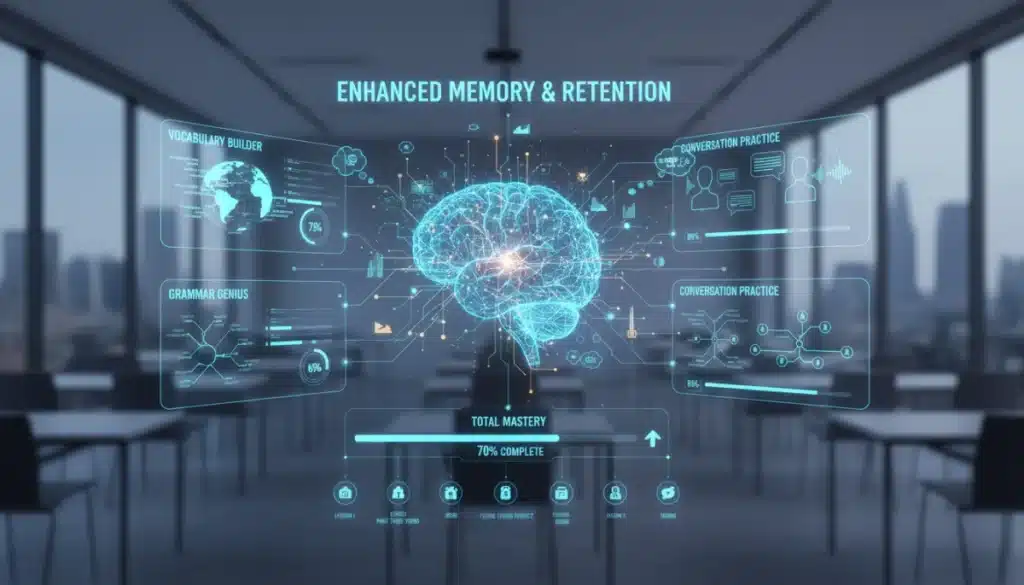
An exciting shift is underway in English language education, as new app features are set to redefine how we learn and retain information. The promise of new app features crushing English evolution lessons with 40% faster retention in 2026 isn’t just a bold claim; it represents a significant leap forward, driven by technological innovation and a deeper understanding of cognitive learning processes. This development signals a future where language acquisition is not only more efficient but also profoundly more engaging and personalized for every learner.
The Dawn of Hyper-Personalized Learning Paths
The traditional one-size-fits-all approach to language learning is rapidly becoming a relic of the past. Modern applications are now capable of creating learning paths that are meticulously tailored to individual needs, strengths, and weaknesses. This hyper-personalization is at the core of why retention rates are expected to soar.
Imagine an English learning app that understands your specific grammatical stumbling blocks, the vocabulary you struggle with most, or even the topics that genuinely pique your interest. This isn’t science fiction; it’s the present and near future of language education. By analyzing user interactions, performance data, and even emotional responses, these apps adapt in real-time, ensuring that every minute spent learning is maximally productive.
Adaptive Content Delivery
One of the key elements driving personalized learning is adaptive content delivery. This means the app dynamically adjusts the difficulty, type, and pace of lessons based on your progress and feedback. It’s like having a personal tutor who knows exactly when to challenge you and when to reinforce concepts.
- Real-time difficulty adjustment: Lessons become harder or easier based on immediate performance.
- Topic prioritization: Focus on areas where the learner shows the most need or interest.
- Varied learning modalities: Offer content through text, audio, video, or interactive exercises to match learning styles.
- Spaced repetition optimization: Intelligently schedule reviews to maximize long-term memory retention.
This level of adaptive engagement keeps learners motivated and prevents the frustration often associated with generic learning programs. The result is a learning experience that feels intuitive and remarkably effective, leading directly to improved retention.
The ability to precisely target and address individual learning gaps means less time is wasted on already mastered concepts and more time is dedicated to areas requiring improvement. This efficiency is a critical factor in achieving the projected 40% faster retention rates, transforming the arduous journey of language acquisition into a streamlined and enjoyable process.
AI-Powered Conversational Practice and Feedback
Perhaps one of the most transformative advancements in English learning apps is the integration of sophisticated AI for conversational practice and instant feedback. Overcoming the fear of speaking and receiving immediate, constructive criticism has always been a significant hurdle for language learners. AI is now making this more accessible than ever.
These AI tutors can simulate natural conversations, responding contextually and providing corrections on pronunciation, grammar, and vocabulary in real-time. This mimics the experience of speaking with a native speaker, but with the added benefit of being endlessly patient and always available.
Advanced Speech Recognition and Analysis
The latest speech recognition technologies go beyond simply transcribing words. They can analyze nuances in accent, intonation, and rhythm, providing detailed feedback that helps learners refine their spoken English. This precision is crucial for developing fluency and confidence.
- Pronunciation scoring: Immediate feedback on how closely speech matches native pronunciation.
- Intonation pattern analysis: Guidance on rising and falling tones for more natural speech.
- Grammar correction in context: Suggestions for improving sentence structure during conversation.
- Vocabulary expansion prompts: AI suggests alternative words or phrases to enrich expression.
The continuous cycle of practice, feedback, and refinement, facilitated by AI, creates an immersive learning environment. This constant reinforcement of correct language usage, combined with the low-pressure setting of an AI conversation, significantly accelerates the learning curve and solidifies memory.
By providing an accessible and non-judgmental space for practice, AI-powered conversational tools empower learners to speak more, experiment with new vocabulary, and internalize grammatical structures. This hands-on, interactive approach is a powerful driver behind the projected increase in retention, as active engagement is far more effective than passive consumption.
Gamification and Immersive Learning Environments
Engaging learners and keeping them motivated is paramount for long-term retention. Modern English learning apps are masterfully leveraging gamification and creating immersive environments that turn language acquisition into an enjoyable and addictive experience. This psychological approach taps into intrinsic human desires for achievement and progress.
From earning points and badges to competing with friends or unlocking new levels, gamified elements provide tangible rewards for effort. This not only encourages regular practice but also fosters a sense of accomplishment, reinforcing positive learning behaviors and making the process feel less like a chore and more like a game.
Virtual Reality (VR) and Augmented Reality (AR) Integration
Beyond traditional gamification, the integration of VR and AR technologies is ushering in a new era of immersive language learning. Imagine practicing English in a virtual coffee shop, ordering food in a simulated restaurant, or navigating a foreign city, all from the comfort of your home.
- Scenario-based learning: Practice real-world conversations in virtual environments.
- Interactive object labeling: Use AR to label objects in your physical environment with English words.
- Cultural immersion: Experience virtual tours of English-speaking countries, learning language in context.
- Role-playing simulations: Engage in simulated interviews or presentations to build confidence.
These immersive experiences provide context and practical application for learned vocabulary and grammar, making the knowledge stick more effectively. When learning is tied to sensory experiences and real-world scenarios, the brain forms stronger, more lasting memories, directly contributing to superior retention.
The combination of well-designed gamification and cutting-edge immersive technologies transforms English learning from a solitary academic pursuit into an interactive adventure. This heightened engagement and practical application are crucial for embedding linguistic knowledge deeply into long-term memory, leading to the promised faster retention rates.
Predictive Analytics for Proactive Intervention
A silent but powerful force behind the projected 40% faster retention is the sophisticated use of predictive analytics. These advanced algorithms analyze vast amounts of user data to identify potential learning plateaus or areas where a learner might struggle before they even become a problem. This allows apps to proactively intervene with targeted support.
By understanding common learning patterns and individual user behavior, these systems can anticipate difficulties and offer supplementary materials, different teaching approaches, or even suggest a break at the optimal moment. This proactive support prevents frustration and ensures a smoother, more efficient learning journey.
Early Identification of Learning Gaps
Predictive analytics models are constantly evaluating a learner’s progress across various linguistic domains – vocabulary, grammar, listening comprehension, and speaking fluency. They can pinpoint specific skills that are lagging and recommend precise interventions.
- Performance trend analysis: Identify declining performance in specific areas.
- Engagement pattern recognition: Detect signs of disengagement or boredom.
- Personalized recommendation engine: Suggest specific exercises or lessons to address identified weaknesses.
- Optimal review scheduling: Predict when a learner is most likely to forget certain information and schedule timely reviews.
This foresight allows the app to act as an intelligent guide, continuously optimizing the learning path to prevent knowledge decay. By intervening before issues escalate, learners maintain momentum and confidence, directly impacting their ability to retain new information more quickly and effectively.
The power of predictive analytics lies in its ability to personalize support on an unprecedented level. By eliminating potential roadblocks before they materialize, these apps ensure a consistent and optimized learning flow, which is instrumental in achieving the ambitious goal of 40% faster English retention by 2026.
Neuroscience-Backed Learning Techniques
The advancements in app features are not just about technology; they are deeply rooted in a better understanding of how the human brain learns and retains information. English learning apps are increasingly integrating principles from cognitive neuroscience to optimize their methodologies, moving beyond rote memorization to more effective, brain-friendly approaches.
Techniques like spaced repetition, active recall, and interleaved practice, once confined to academic research, are now seamlessly integrated into app design. These methods are scientifically proven to enhance memory consolidation and long-term retention, providing a robust foundation for the projected improvements in learning outcomes.
Leveraging Cognitive Principles for Memory
Understanding how memory works allows app developers to design features that align with the brain’s natural processes for acquiring and storing new information. This informed design is a crucial differentiator from older, less effective learning tools.
- Spaced Repetition Systems (SRS): Algorithms schedule reviews at increasing intervals, targeting the optimal moment before forgetting.
- Active Recall Practice: Encourage learners to retrieve information from memory rather than passively re-reading it, strengthening neural pathways.
- Interleaving: Mix different types of problems or topics within a single study session to improve discrimination and long-term retention.
- Contextual Learning: Present new vocabulary and grammar within meaningful sentences and scenarios, aiding memory and application.
By employing these scientifically validated techniques, English learning apps are not just delivering content; they are actively shaping how that content is processed and stored in the brain. This intelligent application of neuroscience is a cornerstone of the expected dramatic increase in retention rates.
The deliberate integration of neuroscience principles ensures that the learning process is not only efficient but also highly effective at fostering deep understanding and long-term memory. This scientific approach to language education is a key driver behind the impressive claim of 40% faster retention, making learning more intuitive and sticky.
The Broader Impact on Global Communication and Education
The implications of these advanced English learning app features extend far beyond individual learners. A 40% faster retention rate in English evolution lessons by 2026 has the potential to significantly impact global communication, economic opportunities, and educational equity. As English remains a dominant language in business, science, and international relations, making its acquisition more efficient democratizes access to these global spheres.
For individuals in the United States and worldwide, faster English learning means quicker integration into global workforces, enhanced travel experiences, and improved access to information. For educators, these tools offer powerful complements to traditional teaching, allowing for more personalized instruction and better student outcomes.
Bridging Communication Gaps
Faster and more effective English acquisition can break down language barriers more rapidly, fostering greater understanding and collaboration across cultures. This has profound implications for a more interconnected world.
- Enhanced international business: Facilitates smoother communication and stronger partnerships.
- Increased access to global knowledge: Allows more individuals to engage with English-language research and media.
- Improved educational opportunities: Opens doors to higher education and specialized training programs globally.
- Cultural exchange: Enables deeper connections and understanding between people from diverse linguistic backgrounds.
The ripple effect of these technological advancements in English learning is immense. By accelerating language proficiency, these apps are not just teaching a language; they are empowering individuals and communities to participate more fully in the global conversation, leading to a more inclusive and interconnected future.
Ultimately, the advent of these highly effective English learning apps marks a pivotal moment in education. The promise of 40% faster retention is not merely a statistical improvement but a catalyst for broader societal benefits, ensuring that more people can harness the power of English to achieve their personal and professional aspirations on a global scale.
| Key Feature | Impact on Retention |
|---|---|
| Hyper-Personalized Learning | Tailors content to individual needs, maximizing engagement and efficiency. |
| AI Conversational Practice | Provides real-time feedback and immersive speaking practice, building fluency. |
| Gamification & Immersive Tools | Boosts motivation and creates memorable learning experiences through VR/AR. |
| Neuroscience-Backed Methods | Integrates spaced repetition and active recall for stronger memory consolidation. |
Frequently Asked Questions About English Learning App Advancements
These apps leverage AI for hyper-personalized learning paths, real-time conversational feedback, and predictive analytics. They also integrate neuroscience-backed techniques like spaced repetition and active recall, optimizing how the brain processes and stores information, leading to significantly quicker and more durable learning outcomes.
AI is central to personalizing content, providing adaptive difficulty adjustments, and offering sophisticated conversational practice. It analyzes speech patterns, corrects grammar in context, and suggests vocabulary, essentially acting as an infinitely patient and precise virtual tutor, enhancing both speaking skills and comprehension.
Many developers aim for broad accessibility across various devices and operating systems. While some advanced features like VR/AR might require specific hardware, the core AI-driven personalization and conversational tools are increasingly available on standard smartphones and tablets, making them widely accessible to diverse learners.
VR and AR create realistic, interactive environments where learners can practice English in context. By simulating real-world scenarios like ordering food or navigating a city, these technologies provide practical application of language, which strengthens memory and makes learning more engaging and memorable than traditional methods.
The long-term impact is profound. These apps are democratizing access to high-quality English education, accelerating global communication, and opening up new economic and educational opportunities. They are setting a new standard for language acquisition, making it more efficient, engaging, and effective for millions worldwide, including in the United States.
Conclusion
The landscape of English language learning is undergoing an unprecedented transformation, driven by the powerful confluence of artificial intelligence, neuroscience, and immersive technologies. The projection of 40% faster retention rates by 2026 is not merely an optimistic forecast but a tangible outcome of these sophisticated new app features. By offering hyper-personalized learning paths, AI-powered conversational practice, engaging gamified environments, predictive analytics, and neuroscience-backed methodologies, these applications are fundamentally reshaping how individuals acquire and retain English proficiency. This evolution promises not only a more efficient and enjoyable learning experience for millions but also holds significant potential to enhance global communication, foster greater understanding, and expand opportunities across the globe. The future of English education is here, and it’s more intelligent and effective than ever before.
