AI Chip Shortage Alert: Navigate 2026 US Supply Chain Disruptions
Advertisements
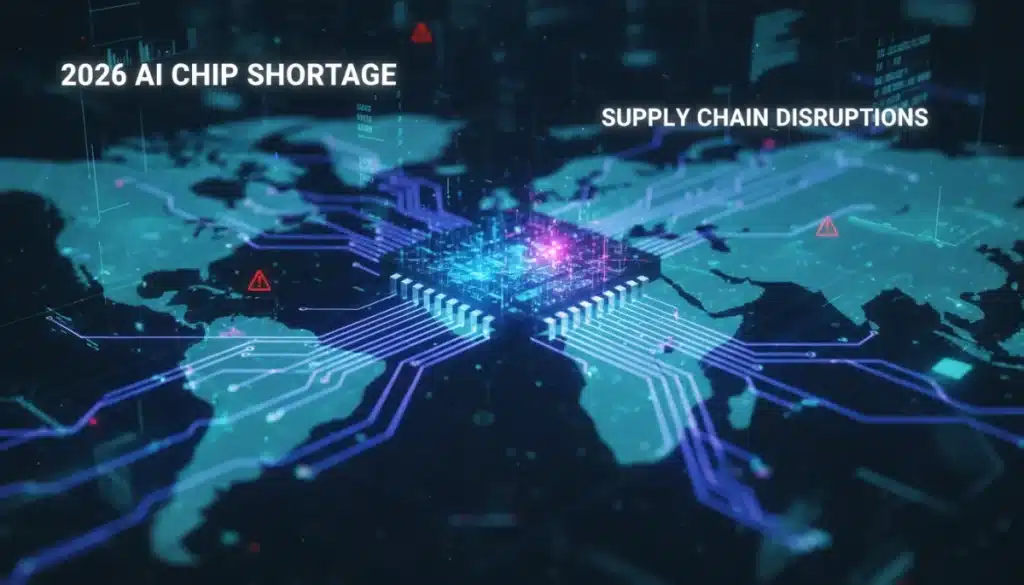
The projected 2026 AI chip shortage in the US necessitates immediate strategic planning, including vendor diversification and supply chain optimization, to prevent significant technological and economic setbacks.
The dawn of artificial intelligence has ushered in an era of unprecedented innovation, yet it also presents formidable challenges. One of the most pressing concerns on the horizon for the United States is the anticipated AI chip shortage 2026. This isn’t merely a technical hiccup; it’s a potential economic tremor that could impact everything from advanced computing to automotive manufacturing. Understanding the roots of this impending crisis and, more importantly, developing agile vendor switching strategies are paramount for businesses and policymakers alike.
Understanding the Impending AI Chip Shortage in 2026
The rapid acceleration of AI development has created an insatiable demand for specialized semiconductor chips, the very brains of AI systems. These chips, particularly Graphics Processing Units (GPUs) and Application-Specific Integrated Circuits (ASICs), are crucial for training complex AI models and deploying AI-powered applications. However, the global semiconductor manufacturing capacity has struggled to keep pace with this exponential growth, leading to a projected significant shortfall by 2026.
Several factors contribute to this looming crisis. Geopolitical tensions, the high cost and complexity of building new fabrication plants (fabs), and the specialized nature of AI chip manufacturing all play a role. Furthermore, the concentration of advanced chip manufacturing in a few regions creates inherent vulnerabilities, making the supply chain susceptible to disruptions.
The Growing Demand for AI Hardware
The explosion of AI applications across various sectors fuels an ever-increasing demand for high-performance chips. From data centers powering cloud AI services to edge devices enabling AI on the go, the need for these specialized processors is relentless.
- Data Centers: Cloud providers are rapidly expanding their AI infrastructure, requiring vast quantities of advanced GPUs.
- Autonomous Vehicles: Self-driving cars demand powerful AI chips for real-time sensor data processing and decision-making.
- Generative AI: The emergence of generative AI models like large language models (LLMs) requires immense computational power for training and inference.
- Industrial Automation: AI is being integrated into manufacturing and robotics, driving demand for specialized chips.
This escalating demand, coupled with the inherent limitations in scaling up production, paints a clear picture of an impending supply crunch. Businesses that rely heavily on AI technologies must begin preparing now to avoid significant operational setbacks.
Geopolitical Landscape and Supply Chain Vulnerabilities
The global semiconductor supply chain is intricately linked with geopolitical dynamics, and this connection is a primary driver of the anticipated AI chip shortage 2026. The concentration of advanced manufacturing capabilities in specific regions, particularly East Asia, exposes the entire ecosystem to significant risks.
Trade disputes, export controls, and regional instability can quickly disrupt the flow of critical components and finished products. For the United States, this means a reliance on external suppliers for essential AI hardware, creating a strategic vulnerability. Governments and corporations are increasingly recognizing the need for greater domestic production and diversification to build a more resilient supply chain.
Key Geopolitical Factors
Several geopolitical elements exacerbate the fragility of the AI chip supply chain. Understanding these factors is crucial for developing effective mitigation strategies.
- Taiwan’s Central Role: Taiwan Semiconductor Manufacturing Company (TSMC) is a world leader in advanced chip fabrication. Any disruption to its operations, whether political or natural, would have catastrophic global consequences.
- US-China Tech Rivalry: The ongoing competition between the US and China over technological supremacy has led to export restrictions and efforts to decouple supply chains, further complicating global chip availability.
- Raw Material Sourcing: The extraction and processing of rare earth elements and other critical materials, often concentrated in a few countries, present another point of vulnerability.
The confluence of these factors makes the 2026 forecast for AI chips particularly concerning. Businesses must consider not only technological capabilities but also the political stability and trade policies of their suppliers’ regions.
Strategic Vendor Switching: A Core Mitigation Strategy
In the face of a projected AI chip shortage 2026, one of the most critical strategies for businesses is the implementation of robust vendor switching protocols. Relying on a single supplier, even a highly reliable one, introduces unacceptable levels of risk. Diversifying your supplier base across different geographies and manufacturing capabilities can significantly enhance resilience.
Vendor switching isn’t merely about finding a new supplier; it involves a comprehensive assessment of alternative partners, rigorous qualification processes, and often, redesigning products to accommodate different chip architectures. This proactive approach can ensure continuity of operations even when primary supply channels are disrupted.
Developing a Diversified Supplier Ecosystem
Building a resilient supply chain means cultivating relationships with multiple vendors. This includes not only primary chip manufacturers but also alternative foundries, packaging and testing facilities, and even intellectual property (IP) providers.
- Identify Alternative Suppliers: Research and identify potential vendors with compatible technologies and manufacturing capabilities.
- Qualify New Partners: Conduct thorough due diligence, including technical audits, financial stability checks, and supply chain transparency assessments.
- Design for Flexibility: Whenever possible, design products with modularity and compatibility in mind, allowing for easier integration of chips from different vendors.
- Negotiate Flexible Contracts: Establish agreements that allow for volume adjustments and alternative sourcing in times of crisis.
By actively working to diversify their vendor portfolio, companies can significantly reduce their exposure to the risks associated with a concentrated supply chain and better navigate the looming chip shortage.
Building Supply Chain Resilience Beyond Vendor Switching
While vendor switching is a crucial component of navigating the AI chip shortage 2026, a holistic approach to supply chain resilience extends much further. It involves a multi-faceted strategy encompassing inventory management, demand forecasting, domestic production initiatives, and technological innovation. True resilience means not just reacting to disruptions but anticipating and proactively mitigating them.
Companies must invest in advanced analytics and digital tools to gain real-time visibility into their supply chains, enabling quicker responses to emerging issues. Furthermore, collaborating with industry peers and government bodies can create a more robust collective defense against future shortages.
Key Pillars of Resilience
Strengthening the supply chain requires attention to several interconnected areas, creating a robust system that can withstand unforeseen challenges.
- Strategic Inventory Management: Maintain buffer stocks of critical AI chips and components, balancing the cost of holding inventory against the risk of production halts.
- Enhanced Demand Forecasting: Utilize AI and machine learning to improve the accuracy of demand predictions, allowing for better planning with suppliers.
- Domestic Manufacturing Initiatives: Support and invest in increasing domestic semiconductor manufacturing capacity within the US to reduce reliance on foreign sources.
- Circular Economy Principles: Explore options for recycling and reusing components where feasible, reducing reliance on new raw material extraction.
By integrating these strategies, businesses can build a supply chain that is not only robust against the 2026 AI chip shortage but also prepared for future unforeseen disruptions.
Technological Innovations and Design Considerations
Addressing the AI chip shortage 2026 also requires a significant focus on technological innovation and smart design choices. The problem isn’t just about manufacturing more chips; it’s also about making existing chips more efficient and designing systems that require fewer specialized components. This involves pushing the boundaries of chip architecture, software optimization, and alternative computing paradigms.
Companies that can innovate in how they utilize AI hardware, or even develop new forms of AI computation, will be at a significant advantage. This includes exploring chiplets, heterogeneous computing, and even neuromorphic computing.
Optimizing AI Hardware Utilization
Maximizing the efficiency of available AI chips can significantly alleviate the pressure of a shortage. This involves both hardware and software advancements.
- Chiplet Architectures: Designing chips from smaller, interconnected modules can increase manufacturing flexibility and potentially improve yields.
- Software Optimization: Developing more efficient AI algorithms and software frameworks that require less computational power can reduce the burden on hardware.
- Heterogeneous Computing: Utilizing a mix of different types of processors (CPUs, GPUs, FPGAs) to handle AI workloads can offer flexibility and performance gains.
- Edge AI Optimization: Designing AI models specifically for resource-constrained edge devices can reduce the need for powerful, centralized AI chips.
By embracing these technological advancements, companies can not only mitigate the impact of the upcoming shortage but also drive the next wave of AI innovation.
Government Policies and Industry Collaboration
Navigating the AI chip shortage 2026 is not solely the responsibility of individual companies; it requires concerted efforts from governments and broad industry collaboration. Policy decisions can significantly influence investment in domestic manufacturing, research and development, and the overall resilience of the semiconductor ecosystem. Similarly, industry collaboration can foster shared solutions and best practices.
In the United States, initiatives like the CHIPS and Science Act aim to boost domestic semiconductor production and research. These policies, coupled with strategic partnerships between tech giants and startups, are vital for securing the nation’s AI future.
Key Areas for Policy and Collaboration
Effective responses to the chip shortage demand a coordinated approach across multiple stakeholders.
- Funding for Domestic Fabs: Government incentives and funding are critical to encourage the construction and operation of new semiconductor fabrication plants within the US.
- Workforce Development: Investing in STEM education and training programs is essential to cultivate the skilled labor force needed for advanced chip manufacturing.
- International Cooperation: Collaborating with allied nations on supply chain resilience, research, and development can strengthen global stability.
- Information Sharing: Industry consortia can facilitate the sharing of best practices, risk assessments, and early warning signals regarding supply chain disruptions.
The collective action of government and industry will be indispensable in transforming the challenge of the AI chip shortage into an opportunity for long-term strategic advantage.
| Key Strategy | Brief Description |
|---|---|
| Vendor Diversification | Cultivating multiple suppliers across different regions to reduce reliance on any single source for AI chips. |
| Supply Chain Resilience | Implementing robust inventory, forecasting, and domestic production to withstand disruptions. |
| Technological Innovation | Developing more efficient chip designs and software optimizations to reduce hardware demands. |
| Government & Industry Collaboration | Coordinated efforts to fund domestic manufacturing, workforce development, and international partnerships. |
Frequently Asked Questions About the 2026 AI Chip Shortage
The shortage is primarily driven by an explosive growth in AI demand across industries, coupled with the inherent complexities and high costs of expanding advanced semiconductor manufacturing capacity globally. Geopolitical factors also play a significant role.
US businesses could face significant delays in product development, manufacturing halts, increased costs for AI hardware, and a slowdown in AI innovation if they do not proactively implement mitigation strategies like vendor switching and supply chain diversification.
Effective vendor switching involves identifying, qualifying, and onboarding multiple alternative suppliers, designing products for flexibility, and negotiating contracts that allow for agile sourcing to maintain supply continuity.
Government policies are crucial for providing incentives for domestic manufacturing, investing in R&D, fostering workforce development, and engaging in international cooperation to build a more resilient and secure semiconductor supply chain.
Technological innovation can help by developing more efficient chip architectures (like chiplets), optimizing AI software to demand less hardware, and exploring alternative computing paradigms to reduce reliance on current high-demand AI chips.
Conclusion
The looming AI chip shortage 2026 for the United States is a complex challenge, but one that is surmountable with proactive planning and strategic execution. By embracing robust vendor switching strategies, fostering comprehensive supply chain resilience, driving technological innovation, and promoting strong government-industry collaboration, businesses and the nation as a whole can navigate these disruptions. The future of AI, and indeed much of modern technology, hinges on our ability to secure a stable and diverse supply of these critical components. The time to act is now, transforming potential vulnerabilities into opportunities for growth and self-sufficiency.
