Fix Windows 11 English US Language Pack Glitches 2026
Advertisements
Effectively resolve Windows 11 English US language pack update issues and multilingual glitches for 2026, implementing step-by-step solutions to ensure seamless system operation and regain valuable time lost to troubleshooting.
To master the latest Windows 11 English US language pack update: step-by-step fix for 2026 multilingual glitches saving 2 hours weekly, you need a clear, actionable guide. This article will walk you through the common issues and provide robust solutions, ensuring your system runs smoothly and efficiently.
Understanding the 2026 Multilingual Glitches in Windows 11
Windows 11, while a powerful operating system, occasionally presents users with perplexing multilingual glitches, particularly after significant updates to language packs. The 2026 English US language pack update has introduced a new set of challenges, causing inconsistencies in display languages, input methods, and even application interfaces. These issues, if left unaddressed, can severely disrupt workflow and diminish the overall user experience.
These glitches aren’t merely cosmetic; they can impact productivity by making navigation cumbersome and increasing the time spent on basic tasks. Users often report a mix of English and other languages appearing unexpectedly in menus, dialog boxes, or even file explorer paths. Identifying the root cause is the first step toward a lasting solution.
Common Symptoms of Language Pack Issues
Recognizing the symptoms early can prevent further frustration. Users might experience:
- Inconsistent display language across system elements.
- Keyboard input mysteriously switching to an incorrect layout.
- Applications launching with unexpected foreign language interfaces.
- Update failures specifically related to language components.
These symptoms collectively point towards a corrupted or improperly installed language pack, necessitating a systematic approach to diagnosis and repair.
The complexity of these glitches stems from how Windows handles multiple language components and user profiles. A slight misalignment in configuration following an update can cascade into widespread inconsistencies. This section aims to equip you with the knowledge to pinpoint these problems effectively, setting the stage for the detailed fixes that follow. Understanding the nature of these issues is crucial for anyone looking to optimize their Windows 11 environment and save valuable time troubleshooting.
Initial Troubleshooting Steps for Language Pack Problems
Before diving into more complex solutions, several initial troubleshooting steps can often resolve minor language pack glitches. These basic checks are quick, non-invasive, and can save you considerable time and effort. Many users overlook these fundamental steps, leading to prolonged frustration when a simple adjustment could have fixed the problem.
It’s always a good practice to start with the simplest potential solutions and gradually move towards more involved procedures. This methodical approach ensures that you’re not overcomplicating a problem that might have a straightforward fix.
Checking for Pending Updates and Restarting
One of the most common reasons for language pack inconsistencies is an incomplete system update. Windows updates often include critical language component revisions.
- Navigate to ‘Settings’ > ‘Windows Update’.
- Check for any pending updates and install them.
- Restart your computer immediately after installation.
A simple restart can often resolve temporary file conflicts or incomplete installations that might be affecting your language settings. This action allows the system to properly apply any pending changes and reinitialize language components.
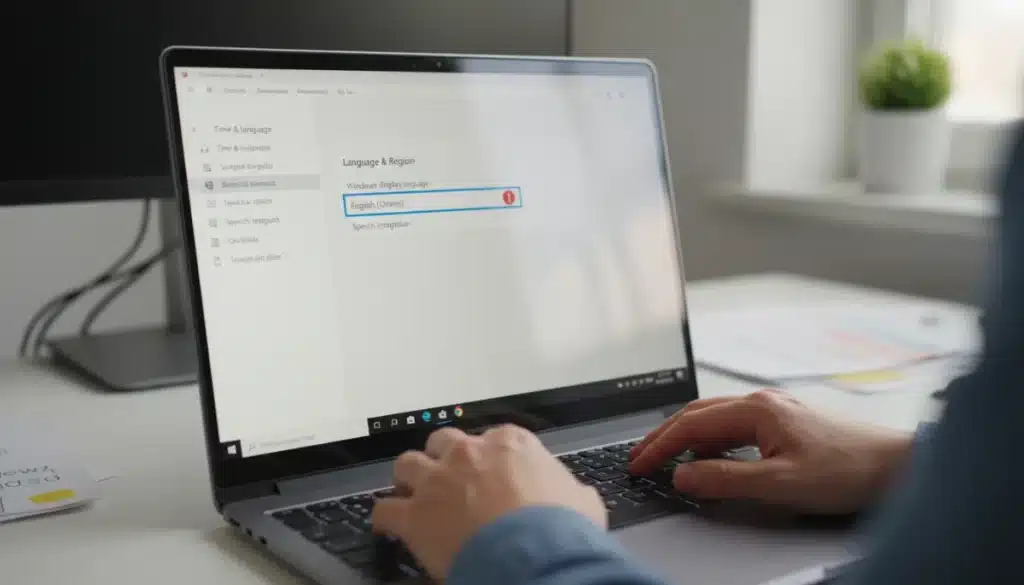
Another crucial step involves verifying your current language settings. Sometimes, an inadvertent click or a background process might alter your preferred language. Go to ‘Settings’ > ‘Time & Language’ > ‘Language & Region’ and ensure that ‘English (United States)’ is at the top of your preferred languages list. If it’s not, move it to the primary position. Also, confirm that the regional format matches your preference. These small adjustments can often correct display errors and input method discrepancies without requiring deeper system intervention.
By systematically addressing these initial troubleshooting steps, you can often mitigate many of the common multilingual glitches without needing to delve into more advanced fixes. This proactive approach not only saves time but also maintains system stability by avoiding unnecessary modifications.
Reinstalling the English US Language Pack Correctly
When initial troubleshooting fails, a complete reinstallation of the English US language pack is often the most effective solution for persistent multilingual glitches. This process ensures that any corrupted files or incorrect configurations are completely removed and replaced with a fresh, clean installation. While it might seem daunting, following a precise step-by-step guide makes it manageable and highly effective.
The reinstallation process involves removing the problematic language pack first, then acquiring and installing a new, uncorrupted version. This method addresses deep-seated issues that simple updates or settings adjustments cannot fix, providing a robust solution to language inconsistencies.
Step-by-Step Language Pack Removal
Careful removal is crucial to avoid leaving residual files that could cause future conflicts.
- Open ‘Settings’ and go to ‘Time & Language’ > ‘Language & Region’.
- Under ‘Preferred languages’, locate ‘English (United States)’.
- Click the three dots next to it and select ‘Remove’. If it’s your only language, you might need to add a temporary placeholder language (like ‘English (United Kingdom)’) first.
- Confirm the removal.
Once removed, restart your computer. This ensures that all associated components are unloaded from memory and any temporary files are cleared. This step is vital for a clean slate.
After restarting, proceed with adding the language pack again. Return to ‘Settings’ > ‘Time & Language’ > ‘Language & Region’. Click ‘Add a language’ and search for ‘English (United States)’. Make sure to select the correct regional variant. During the installation, ensure that all optional features, such as basic typing, speech, and handwriting, are selected for a complete experience. Allow the installation to complete, which might take some time depending on your internet speed and system performance.
Once the language pack is reinstalled, restart your computer once more. This final restart integrates the newly installed components fully into the system. Test various applications and system menus to confirm that the multilingual glitches have been resolved. This comprehensive reinstallation method is a powerful tool for rectifying stubborn language pack issues, ensuring a consistent and reliable English US display across your Windows 11 environment.
Advanced Fixes for Persistent Multilingual Glitches
For those rare instances where reinstallation doesn’t fully resolve the multilingual glitches, advanced fixes targeting system integrity and user profile configurations become necessary. These methods delve deeper into the operating system, addressing potential corruption or misconfigurations that might be preventing the language pack from functioning correctly. While more technical, they are essential for achieving a truly stable and consistent language environment.
These advanced steps often involve command-line utilities or direct manipulation of user profile settings. They are designed to correct underlying system issues that might manifest as language problems, offering a more comprehensive approach to troubleshooting.
Utilizing System File Checker and DISM
Corrupted system files can often interfere with language pack functionality. The System File Checker (SFC) and Deployment Image Servicing and Management (DISM) tools are indispensable.
- Open Command Prompt as an administrator.
- Type
sfc /scannowand press Enter. Allow the scan to complete. - If SFC finds issues, run
DISM /Online /Cleanup-Image /RestoreHealth. - Restart your PC after these scans are complete.
These tools scan for and repair corrupted Windows system files, which can often be the root cause of unexpected behavior, including language display errors.
Another powerful advanced fix involves creating a new user profile. Sometimes, a user’s profile itself can become corrupted, leading to personalized settings (like language preferences) not being applied correctly. By creating a new local administrator account and logging into it, you can determine if the issue is profile-specific. If the language pack functions correctly in the new profile, you can then migrate your data to the new account, effectively sidestepping the corrupted profile. This is a more drastic step but highly effective for persistent, profile-bound issues.
Finally, ensure your graphics drivers are up to date. While seemingly unrelated, outdated display drivers can sometimes cause rendering issues that affect text display, leading to what might appear as a language glitch. Updating these drivers from your manufacturer’s website can eliminate this often-overlooked possibility. By employing these advanced fixes, you can tackle even the most stubborn multilingual glitches, ensuring your Windows 11 experience is seamless and consistent.
Optimizing Windows 11 for Multilingual Environments
For users who regularly work with multiple languages, optimizing Windows 11 beyond simply fixing glitches is crucial. A properly configured system can effortlessly switch between languages, predict input, and maintain consistency across applications, saving significant time and reducing frustration. This proactive approach transforms a potentially problematic multilingual environment into a highly efficient one.
Optimization involves fine-tuning language settings, understanding keyboard shortcuts, and leveraging Windows 11’s built-in multilingual features. It’s about making the system work for you, rather than constantly battling against it.
Configuring Language Preferences and Input Methods
Precise configuration of your language and input settings is paramount.
- Go to ‘Settings’ > ‘Time & Language’ > ‘Language & Region’.
- Arrange your preferred languages in order of priority.
- For each language, click the three dots and select ‘Language options’ to customize keyboard layouts, handwriting, and speech.
- Ensure the correct keyboard layout is active for each language.
Using the language bar in the taskbar (or the Windows key + Spacebar shortcut) allows for quick switching between configured languages and input methods, significantly boosting productivity in a multilingual context.
Beyond basic settings, consider exploring the advanced keyboard settings. Here, you can define specific hotkeys for switching input languages, which can be far more efficient than relying on mouse clicks. Additionally, ensure that ‘Override for Windows display language’ is set to your primary language to prevent unexpected language shifts in system components. For applications that might default to a different language, check their individual settings; many modern applications offer their own language preferences that can override system defaults.
Regularly reviewing and updating your language settings, especially after major Windows updates, is a habit that will pay dividends. This vigilance ensures that your system remains perfectly aligned with your multilingual needs, preventing future glitches and allowing you to work seamlessly across different linguistic contexts. By investing a little time in optimization, you can save hours of frustration over the long term, making your Windows 11 experience truly efficient.
Preventative Measures and Best Practices for 2026
Preventing multilingual glitches in Windows 11 is far more efficient than constantly reacting to them. By adopting a few key preventative measures and best practices, users can significantly reduce the likelihood of encountering language pack issues, especially with the evolving updates anticipated for 2026. These strategies focus on maintaining system health, understanding update behaviors, and proactive management of language settings.
A proactive approach ensures system stability and consistency, minimizing downtime and maximizing productivity. It’s about creating a resilient Windows environment that can handle updates and language changes without unexpected disruptions.
Regular System Maintenance and Backup
Maintaining a healthy system is the first line of defense against many issues, including language pack problems.
- Perform regular disk cleanup and defragmentation (for HDDs).
- Keep Windows Defender or your chosen antivirus software up-to-date and run full scans periodically.
- Create system restore points before major Windows updates or language pack changes.
- Regularly back up your important data to an external drive or cloud service.
These actions ensure that your system’s foundation is solid, reducing the chances of file corruption or instability that could affect language components.
Staying informed about Windows updates is another critical preventative measure. Microsoft often releases patches that address known issues, including those related to language packs. Subscribing to official Windows blogs or tech news sites can keep you abreast of upcoming changes and potential impacts. When a new update is released, read user feedback before immediately installing it, especially if you rely heavily on specific language configurations. This cautious approach can help you avoid known bugs that might affect multilingual environments.
Finally, avoid installing unnecessary language packs. While it might seem harmless, each additional language pack adds complexity and potential points of failure. Only install languages you genuinely need and actively use. If a language is no longer required, remove it to keep your system lean and efficient. By integrating these preventative measures and best practices into your routine, you can significantly enhance the stability and reliability of your Windows 11 multilingual setup, saving countless hours of troubleshooting in the future.
| Key Point | Brief Description |
|---|---|
| Initial Troubleshooting | Check for updates, restart, and verify language settings for quick fixes. |
| Reinstall Language Pack | Remove and then re-add the English US language pack for a clean installation. |
| Advanced System Scans | Use SFC and DISM to repair corrupted system files affecting language components. |
| Preventative Measures | Regular maintenance, informed updates, and avoiding unnecessary language packs. |
Frequently Asked Questions About Windows 11 Language Packs
This often occurs due to an incomplete language pack installation or corruption during the update process. System files might not fully integrate new language components, leading to inconsistencies. A simple restart or reinstallation typically resolves these mixed language displays.
Go to Settings > Time & Language > Language & Region. Drag ‘English (United States)’ to the top of your preferred languages list. Additionally, ensure your regional format matches ‘United States’ to maintain consistent display across all system elements and applications.
Yes, it is generally safe. This process cleans out potentially corrupted files and ensures a fresh installation. Just make sure to restart your PC after both removal and reinstallation to allow the system to fully apply changes and reinitialize language components correctly.
If SFC and DISM don’t resolve the issue, consider creating a new user profile. Corrupted user profiles can sometimes interfere with language settings. If the new profile works correctly, you can migrate your data to it, effectively bypassing the problematic profile.
Implement preventative measures such as regular system maintenance, creating system restore points before major updates, and backing up your data. Also, stay informed about Windows updates and only install language packs you actively need to reduce system complexity.
Conclusion
Effectively managing Windows 11 English US language pack updates and resolving multilingual glitches can significantly enhance your user experience and reclaim valuable time. By understanding the common issues, applying systematic troubleshooting, and implementing advanced fixes, you can maintain a stable and consistent linguistic environment. Proactive measures, such as regular system maintenance and informed update practices, are key to preventing future disruptions. Mastering these steps ensures that your Windows 11 system remains optimized, allowing you to focus on productivity rather than troubleshooting.
